


Professional catering is the structural backbone of any destination wedding package, bundling food service, logistics, and hospitality into one managed contract so couples can focus on celebrating rather than coordinating. Why catering supports destination wedding packages comes down to one core truth: a remote wedding with 80 guests, an outdoor venue, and guests traveling from multiple states cannot succeed on improvised food arrangements. Desertdine works with couples who understand that the food experience shapes how guests remember the entire day. The right catering partner does not just feed people. It manages timing, adapts to the environment, and carries the atmosphere of the event from the first course to the final toast.
Why catering supports destination wedding packages through logistics
Destination wedding packages bundle catering, venue, and hospitality services into one contract, which cuts the number of vendors a couple must manage across different time zones and locations. That consolidation is the single biggest logistical advantage catering brings to a destination package. Without it, couples coordinate separately with a venue, a local food vendor, a rental company, a bartender, and a cleanup crew, often from hundreds of miles away.
A full-service caterer absorbs most of those responsibilities. Full-service caterers handle 100% of cleanup, removing a major post-event burden that couples rarely think about during planning. That means the day after your wedding, you are not managing a cleanup invoice or chasing a local vendor. The caterer owns the entire service arc, from setup through the last table cleared.
The tasks a professional caterer manages at a destination event include:
- Setup and breakdown: Tables, linens, serving stations, and bar equipment arrive and leave on the caterer’s schedule.
- Service timing: Courses are paced to match the ceremony, speeches, and dancing so the event flows naturally.
- Staff coordination: Servers, bartenders, and kitchen staff operate as one unit under a single point of contact.
- Equipment logistics: Chafing dishes, refrigeration, and transport containers are sourced and managed by the caterer.
Pro Tip: Ask your caterer for a written service timeline before the wedding day. A good caterer will map every course, every staff transition, and every cleanup milestone to your event schedule.
Couples who bundle catering into their destination package report far fewer last-minute surprises. The caterer already knows the venue, has confirmed power access, and has a contingency plan if something shifts. That preparation is what separates a managed event from a stressful one.
What unique challenges do destination weddings present to catering?
Destination weddings introduce physical and logistical conditions that standard catering operations never face. Outdoor destination catering prioritizes logistics, timing, and menu adaptation to withstand environmental factors like wind, sand, and extreme heat. Food quality degrades faster outdoors. Service timing becomes harder to control. And the venue itself may offer none of the infrastructure a kitchen requires.
Professional caterers address these challenges through four core preparations:
- Pop-up kitchen infrastructure. Remote venues require caterers to bring full pop-up kitchens, independent power sources, and water systems to deliver top-quality service. This is rarely disclosed by venues upfront, but it is critical to food safety and presentation.
- Menu engineering for travel and environment. Menus are built around dishes that hold texture and temperature in outdoor conditions. Sauces that break in heat, garnishes that wilt in wind, and proteins that dry out quickly are replaced with more stable preparations.
- Contingency planning for weather. Catering contingency plans cover weather risks including wind, rain, and extreme heat, along with equipment transport logistics to maintain food safety throughout the event.
- Advance booking. Large destination weddings require booking 6–12 months in advance, while smaller intimate dinners may need only 2–4 weeks. Booking early locks in the caterer’s infrastructure planning before venue constraints become problems.
Pro Tip: When reviewing destination wedding catering options, ask specifically about the caterer’s backup power plan and weather protocol. If they cannot answer both questions in detail, keep looking.
Experienced caterers treat logistics as the primary discipline and food as the result of getting logistics right. That mindset is what makes the difference between a beautiful outdoor dinner and a service disaster.
How does catering enhance guest experience at destination weddings?
Food is the most sensory part of any wedding. Guests remember what they ate, how it was served, and whether the experience felt personal or generic. Tailored culinary proposals with 3–5 course dinners are customized to dietary needs and venue conditions, and experienced caterers offer private tasting sessions so couples build confidence in the menu before the event.

Customization at a destination wedding goes well beyond choosing between chicken and fish. A full-service caterer builds a menu that reflects the couple’s cultural background, accommodates dietary restrictions across the guest list, and matches the formality of the venue. That level of menu customization is what transforms a meal into a memorable part of the celebration.
The hospitality elements a professional caterer brings include:
- Dietary accommodation: Vegan, gluten-free, kosher, and allergy-specific options prepared in dedicated service lines.
- Cultural menu integration: Dishes that honor family traditions or regional cuisine, woven into a multi-course format.
- Bar service: Licensed bartenders who manage signature cocktails, wine pairings, and non-alcoholic options.
- Service staff: Trained servers who understand pacing, guest interaction, and formal table service.
| Catering element | Guest experience impact |
|---|---|
| Private tasting session | Couple approves every dish before the event |
| Multi-course dinner | Creates a formal, memorable dining arc |
| Dietary accommodations | Every guest feels considered and cared for |
| Trained service staff | Consistent, attentive hospitality throughout |
| Signature cocktails | Adds a personal, celebratory touch to the bar |
Desertdine builds every wedding catering package around the couple’s specific vision, from farm-to-table menus featuring locally sourced ingredients to multi-course dinners designed for outdoor desert venues. The result is a dining experience that feels bespoke, not off-the-shelf.
Why is professional catering more cost-effective than separate vendors?
Hiring a professional caterer is often more cost-effective than assembling individual food vendors for a destination event. Professional catering reduces costs through bulk purchasing, structured hospitality, and waste management that individual vendors cannot match. A caterer buying ingredients for 100 guests negotiates volume pricing. A couple sourcing food from three local vendors pays retail rates and absorbs the coordination risk.
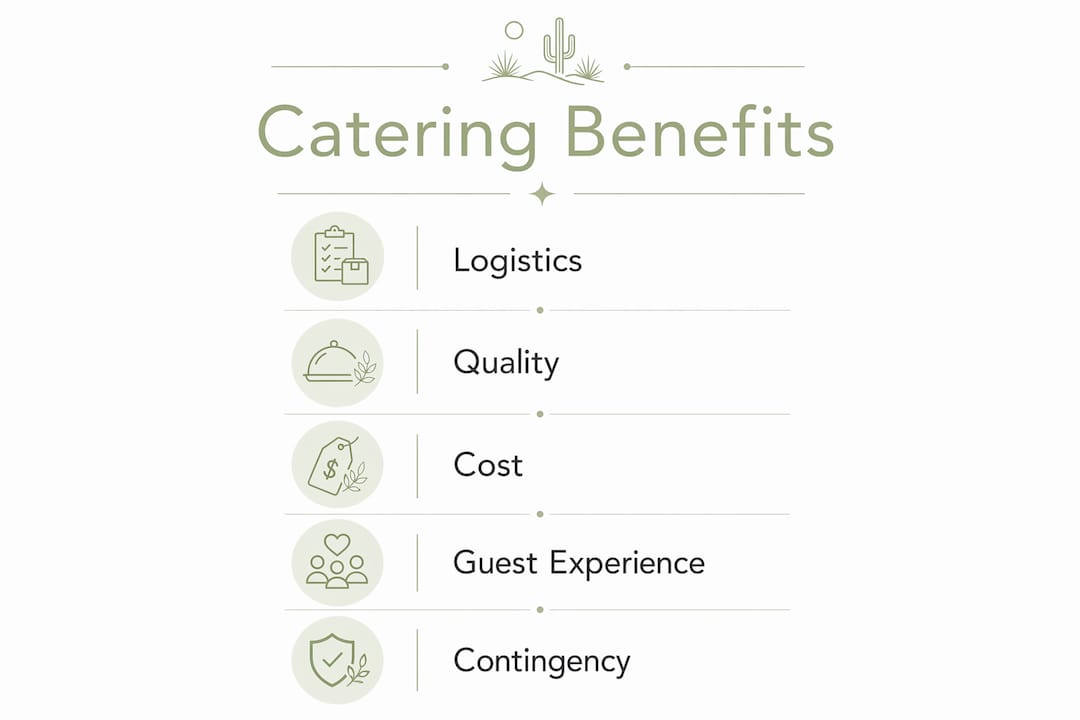
The financial comparison becomes clearer when you account for hidden costs. Last-minute vendor changes, equipment rental gaps, and service timing failures all carry price tags that couples rarely budget for. A vetted catering partner reduces planning complexity and delivers consistent quality because they have managed these variables before.
| Approach | Cost control | Vendor coordination | Contingency coverage |
|---|---|---|---|
| Bundled professional catering | Bulk purchasing, structured pricing | Single point of contact | Built into service contract |
| Separate local vendors | Retail pricing, variable quotes | Multiple contacts, higher risk | Rarely included |
Professional catering economies of scale also apply to staffing. A catering company brings its own trained team rather than hiring day-of staff from a local agency. That consistency in staffing directly reduces service errors and guest complaints. For a destination wedding where you cannot run a rehearsal with your vendors, that reliability is worth more than the line-item savings of going with cheaper, separate options.
Key Takeaways
Catering supports destination wedding packages by consolidating logistics, protecting food quality in challenging environments, and delivering personalized hospitality that shapes how guests remember the entire event.
| Point | Details |
|---|---|
| Logistics consolidation | Bundled catering contracts reduce vendor coordination across time zones and locations. |
| Infrastructure planning | Professional caterers bring pop-up kitchens, power, and water to remote venues. |
| Menu customization | Multi-course, dietary-specific menus are built around the couple’s cultural and personal preferences. |
| Cost efficiency | Bulk purchasing and structured staffing make professional catering more affordable than assembling separate vendors. |
| Contingency coverage | Weather, equipment, and timing risks are managed within the catering contract, not left to the couple. |
What I’ve learned from watching destination weddings succeed and fail
Couples often underestimate how much a destination wedding depends on one thing: who controls the food and service timeline. I have watched beautifully planned weddings lose their momentum because the food arrived late, the bar ran dry during cocktail hour, or the cleanup crew showed up before guests had finished dessert. None of those failures were about the food itself. They were logistics failures.
The couples who had the best experiences shared one common decision: they treated catering as the operational center of the event, not an afterthought. They booked early, attended tasting sessions, and asked hard questions about contingency plans. They also chose caterers who had worked their specific venue type before, whether that was an open desert, a beachside terrace, or a private villa.
The uncomfortable truth about destination wedding catering is that the food is the easiest part. Any skilled chef can produce a beautiful multi-course dinner. What separates a great catering partner from an average one is how they handle the hour before service when the generator flickers, the wind picks up, and two guests announce a new dietary restriction. That is where experience shows. That is where a well-planned catering timeline becomes the difference between a smooth evening and a chaotic one.
Choose your caterer the way you choose your venue: with specificity, with questions, and with a clear picture of what you need them to manage beyond the plate.
— James
Desertdine’s catering for your destination wedding
Desertdine brings full-service catering expertise to destination weddings across the Greater Palm Springs area and neighboring desert communities, managing everything from farm-to-table menu design to on-site logistics and staffing.
Whether your wedding is an intimate desert dinner for 20 or a formal outdoor reception for 150, Desertdine builds a catering program around your venue, your guests, and your vision. Every package includes menu customization, private tasting sessions, trained service staff, and complete event-day management. Explore wedding catering in Temecula and the surrounding region, or visit Desertdine’s full wedding catering services to request a quote and start planning your celebration.
FAQ
Why is catering included in destination wedding packages?
Destination wedding packages bundle catering with venue and hospitality services to reduce vendor coordination across locations and time zones. This consolidation simplifies planning and lowers the risk of last-minute service failures.
How far in advance should I book catering for a destination wedding?
Large destination weddings require booking 6–12 months in advance, while smaller intimate events may need only 2–4 weeks. Earlier booking gives your caterer time to plan infrastructure, menus, and contingency logistics for your specific venue.
What makes outdoor destination wedding catering different?
Outdoor catering requires menu engineering for environmental conditions like heat, wind, and sand, plus mobile kitchen infrastructure including independent power and water. Caterers also build weather contingency plans into the service contract.
Can a destination wedding caterer accommodate dietary restrictions?
Professional caterers build multi-course menus with dedicated service lines for vegan, gluten-free, allergy-specific, and culturally specific dietary needs. Private tasting sessions let couples confirm every option before the event day.
Is professional catering more affordable than hiring separate vendors?
Professional catering is typically more cost-effective because caterers use bulk purchasing, structured staffing, and waste management that individual vendors cannot offer. Bundled pricing also eliminates the hidden costs of coordinating multiple separate contracts.
Recommended
- Desert Dine Catering |What Is Catering for Destination Events: Expert Guide• Palm Springs & Coachella Valley
- Desert Dine Catering |Why Catering Supports Outdoor Sunset Parties• Palm Springs & Coachella Valley
- Desert Dine Catering |How to Pair Catering with Your Wedding Theme• Palm Springs & Coachella Valley
- Desert Dine Catering |Why Catering Supports Wellness Retreat Menus• Palm Springs & Coachella Valley


