


A catering tasting event is defined as a structured pre-event session where clients sample prioritized menu items, evaluate service logistics, and confirm food safety protocols before committing to a final catering plan. Catering tasting event best practices combine strategic menu selection, service workflow rehearsal, and strict temperature compliance to protect guests and guarantee a smooth event day. The industry standard for these sessions follows a 1–2 hour format covering 6–12 carefully chosen dishes, with tasting rooms typically accommodating up to four people. For event coordinators and couples planning weddings or special occasions, mastering these practices is the difference between a confident booking and an expensive surprise on the day.
1. Plan the optimal tasting menu before you arrive
The most effective tasting menus focus on 3–5 options per course, covering a total of 6–12 carefully prioritized items across the session. Attempting to taste every dish on a full catering catalog is impractical and counterproductive. Flavor fatigue sets in quickly, and your ability to evaluate quality drops after the first several dishes.
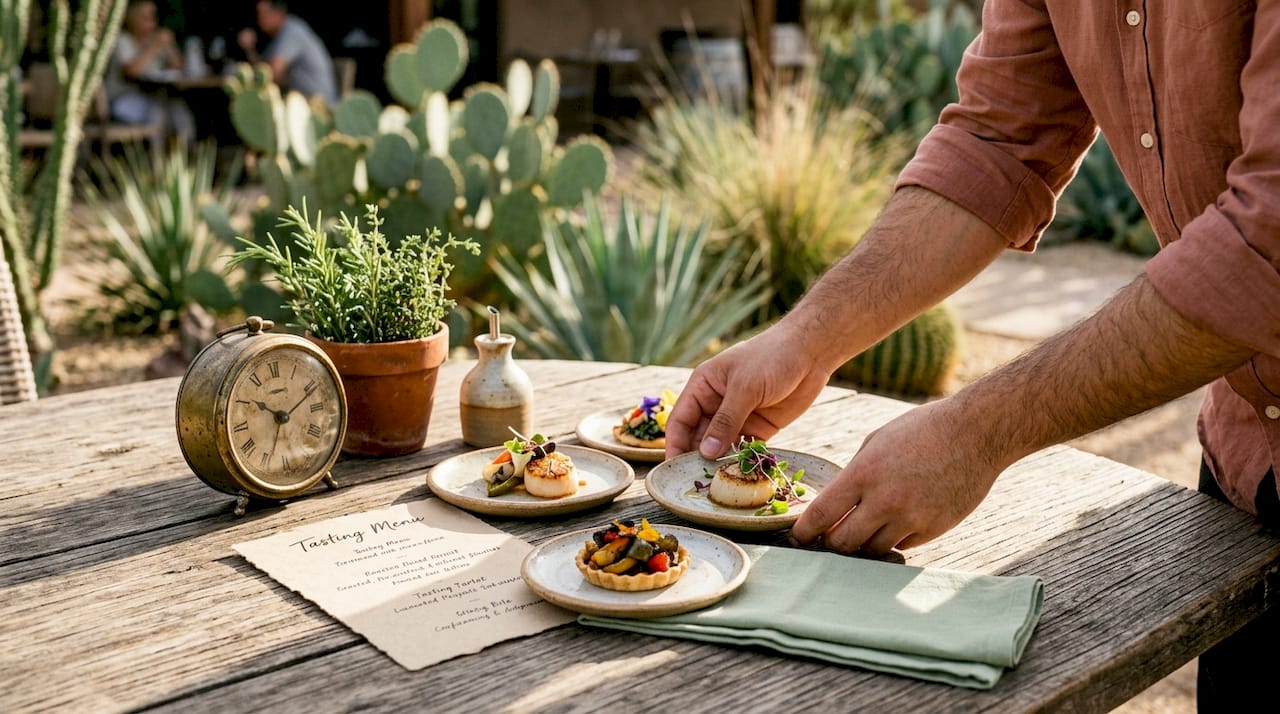
Work with your caterer to select items that represent the full range of your planned menu, including starters, mains, sides, and desserts. Prioritize dishes that will actually be served at your event, not showpieces that exist only for the tasting. According to 2026 industry guidance, for events with over 50 guests, at least 40% of menu items should naturally meet common dietary restrictions to promote inclusivity.
Your tasting selection should also reflect your guest list’s dietary profile. Build in at least one vegan option and one gluten-free option as standard, even if only a small portion of your guests require them. Reviewing menu customization options before your session helps you arrive with a clear shortlist rather than making decisions on the spot.
- Confirm your guest count and dietary breakdown before the tasting
- Select dishes that scale well for large groups, not just intimate plating
- Include at least one dish from each course you plan to serve
- Ask the caterer which items perform best at your expected guest count
- Balance familiar crowd-pleasers with any signature or specialty dishes
Pro Tip: Bring a written list of all confirmed dietary restrictions and allergies to the tasting. Hand it to the caterer at the start of the session so every dish can be evaluated against your actual guest needs.
2. Use the tasting as a full service rehearsal
A tasting is more than a flavor test. It validates portion size, presentation styles, and service timing under conditions that mirror your actual event. Treating it as a pure culinary exercise misses more than half its value.
Bring a rough timeline of your event to the session. Share it with the caterer so they can walk you through how each course fits into your program, from cocktail hour through the final dessert service. This conversation often reveals timing conflicts that would only surface on event day.
Pay close attention to how dishes are presented during the tasting. A plated tasting for two is not representative of service to a crowd of 300. Ask to see buffet setups, chafing dish arrangements, or interactive station layouts if those formats apply to your event. Seeing the actual serving style prevents unrealistic expectations about temperature maintenance and visual presentation at scale.
- Observe how quickly dishes arrive and how staff manages the pace
- Note whether food holds its temperature and texture between courses
- Ask how the caterer handles a table that runs behind schedule
- Evaluate staff professionalism, attentiveness, and communication style
- Request to see the actual serveware, linens, and plating tools planned for your event
Pro Tip: Take notes and photos during the session. Memory fades fast after tasting multiple dishes. A photo of each plate alongside a brief written note on seasoning, texture, and presentation gives you a reliable reference when making final decisions.
3. Confirm food safety and temperature standards
Food safety is non-negotiable at any catered event. Hot food must stay above 140°F and cold food must stay below 40°F throughout service. Any food that spends more than two hours in the 40°F–140°F danger zone must be discarded.
During the tasting, ask how the caterer monitors temperatures during a live event. Professional operations check temperatures every 30 minutes and log results throughout service. This is not bureaucratic overhead. It is the standard that separates experienced caterers from those who create liability for their clients.
Allergen management is equally critical. Ask how the kitchen separates allergen-containing dishes from safe alternatives and how staff communicates those distinctions to guests. Reviewing catering best practices for planners gives you a strong baseline for what to expect from a professional operation.
| Safety Standard | Requirement |
|---|---|
| Hot food holding temperature | Above 140°F at all times during service |
| Cold food holding temperature | Below 40°F at all times during service |
| Danger zone exposure limit | Discard after 2 hours between 40°F and 140°F |
| Temperature monitoring frequency | Every 30 minutes with logged records |
| Cross-contamination prevention | Strict separation of raw and ready-to-eat foods |
4. Ask the right questions during the tasting
The questions you ask during a tasting reveal more about a caterer’s readiness than the food itself. Contingency planning is a direct marker of operational maturity. A caterer who cannot answer questions about equipment failure or unexpected guest surges is not ready for a high-stakes event.
Prepare a focused list of questions before you arrive. Cover logistics, staffing, flexibility, and vendor coordination. The answers tell you whether this caterer is a true partner or simply a food provider.
- What is your plan if a key piece of equipment fails on event day?
- How do you handle a guest count that exceeds the confirmed number?
- What is your staffing ratio for plated service versus buffet? (Industry standard: 1 server per 20 guests for plated meals)
- Can the menu be adjusted after the tasting if we change our minds?
- How do you coordinate with other vendors such as florists, venues, and AV teams?
- Who is the point of contact on event day and how do we reach them?
- What does your cleanup process look like and what rentals are included?
Pro Tip: Request written documentation of all contingency plans and service agreements before signing a contract. A caterer confident in their operation will provide this without hesitation.
5. Give honest, specific feedback during the session
Honest feedback during the tasting is the mechanism that produces a better final menu. Treating the caterer as a partner in menu refinement rather than expecting perfection at first tasting leads to a more tailored result. The tasting is a dialogue, not an audition.
Cleanse your palate with water or plain bread between dishes. This resets your taste receptors and gives each dish a fair evaluation. Comment specifically on seasoning, temperature, texture, and portion size rather than offering vague impressions.
If a dish is under-seasoned, say so. If a sauce is too heavy for a summer outdoor event, say that too. Caterers with experience welcome this feedback because it allows them to refine the menu before the event, not after. Interactive chef stations and tasting flights also offer a way to engage guests more deeply during the event itself, and your tasting is the right moment to explore whether those formats fit your vision.
Key Takeaways
The most effective catering tasting combines menu prioritization, service rehearsal, food safety verification, and direct caterer dialogue to eliminate event-day surprises.
| Point | Details |
|---|---|
| Limit tasting items | Sample 6–12 dishes focused on 3–5 options per course to avoid flavor fatigue. |
| Rehearse service logistics | Bring your event timeline and evaluate pacing, presentation, and staff ratios. |
| Verify food safety standards | Confirm hot and cold holding temperatures and 30-minute monitoring intervals. |
| Ask about contingency plans | A caterer’s response to “what if” questions reveals their true operational readiness. |
| Give specific feedback | Name exact issues with seasoning, temperature, and texture so the caterer can refine the menu. |
What I’ve learned from watching tastings go wrong
Most couples and coordinators walk into a tasting focused entirely on flavor. That focus is understandable, but it leaves the most important questions unasked. I have seen beautifully tasted menus fall apart on event day because nobody asked how a dish would hold at temperature for 90 minutes in a chafing dish, or how the caterer planned to handle a venue that ran 45 minutes behind schedule.
The tasting is your single best opportunity to stress-test the entire operation before money changes hands and guests arrive. Use it that way. Ask uncomfortable questions. Push back on vague answers. A caterer who gets defensive when asked about contingency planning is telling you something important.
The other mistake I see consistently is bringing too many people to the tasting. Four people is the practical maximum. Beyond that, the session becomes a committee meeting, opinions conflict, and the caterer spends more time managing the room than refining the menu. Bring the decision-makers only, and agree on your evaluation criteria before you sit down.
The tastings that produce the best events are the ones where the client and caterer leave the session aligned on every detail, not just the food. That alignment comes from treating the tasting as a full planning conversation, not a free meal.
— James
Desertdine’s approach to tasting and event catering
Planning a wedding or special occasion in the Palm Springs area means you need a catering partner who treats the tasting as seriously as the event itself. Desertdine builds every tasting session around your specific guest list, dietary needs, and event format, from intimate plated dinners to large-scale buffet receptions.
Desertdine’s team walks you through service logistics, portion planning, and menu refinement during the tasting so you arrive at your event day with full confidence. Their Temecula catering services cover weddings, private celebrations, and corporate events with locally sourced ingredients and customizable multi-course menus. You can also explore custom event menus or book your event directly to schedule a tasting consultation.
FAQ
How long does a catering tasting session typically last?
A standard catering tasting lasts 1–2 hours and covers 6–12 prioritized menu items. Most tasting rooms accommodate up to four people to keep feedback focused and decisions clear.
What food safety temperatures should I confirm with my caterer?
Hot food must stay above 140°F and cold food must stay below 40°F throughout service. Any food held in the 40°F–140°F danger zone for more than two hours must be discarded.
How many dishes should I taste per course?
The industry standard is 3–5 options per course. Tasting more than that creates flavor fatigue and makes it harder to evaluate quality accurately.
What questions should I ask about staffing at the tasting?
Ask about the server-to-guest ratio for your service style. For plated meals, the standard is one server per 20 guests. Interactive stations require dedicated attendants beyond that baseline.
Can I change the menu after the tasting?
Most professional caterers allow menu adjustments after the tasting within an agreed timeframe. Confirm this in writing before signing your contract, and clarify any cost implications tied to late changes.
Recommended
- Desert Dine Catering |Corporate Event Catering Best Practices for Planners• Palm Springs & Coachella Valley
- Desert Dine Catering |Checklist of Things to Know Before Confirming a Catered Menu• Palm Springs & Coachella Valley
- Desert Dine Catering |How to Choose A Caterer For An Event - What to Know• Palm Springs & Coachella Valley
- Desert Dine Catering |Types of High-End Catering Presentations for Events• Palm Springs & Coachella Valley


